Does Homeowners Insurance Cover Pool Freeze Damage?
Usually not. Most policies exclude freezing damage to pools. How to close an in-ground pool right, and why an anchored safety cover beats a tarp.

Jay Parrack
Short answer: usually not. Most standard homeowners policies exclude freeze damage to swimming pools, so a cracked line or a split skimmer from water left in the plumbing is generally on you.
Pool closing weekend usually lands between the last hot Saturday and the first frost. Two parts of it matter to your insurance more than people expect: how well the plumbing gets winterized, and what kind of cover goes on.
Freeze Damage to a Pool Usually Isn't Covered
Most standard homeowners policies list freezing as an exclusion for swimming pools, along with fences, patios, and pavement. A cracked pipe, a split skimmer, a popped pump housing, or a heaved deck from water that froze in the lines is generally on you.
There's a reason for that. Insurance is for sudden accidents, and a pool that froze because it wasn't winterized is treated as maintenance. So the closing job is the coverage, in a sense.
Closing It Properly
Every pool is a little different, and if you're not sure, paying a pool company to close it once and watching them do it is money well spent. The basics:
- Lower the water below the skimmer and return lines.
- Blow out the plumbing lines and plug them. Add pool antifreeze if your setup calls for it.
- Drain the pump, filter, heater, and chlorinator, and bring in anything that can come in.
- Balance the water and add winterizing chemicals so you're not opening a swamp in May.
- Keep the receipt if a company does it. If something does go wrong, a documented professional closing helps.
Why a Safety Cover Is Worth It
There are two kinds of winter covers, and they are not the same thing.
A tarp-style winter cover sits on the water held down by water bags. It keeps leaves out. It will not hold up a child or a dog, and water collects on top of it. A child can drown in a few inches of water on top of a pool cover.
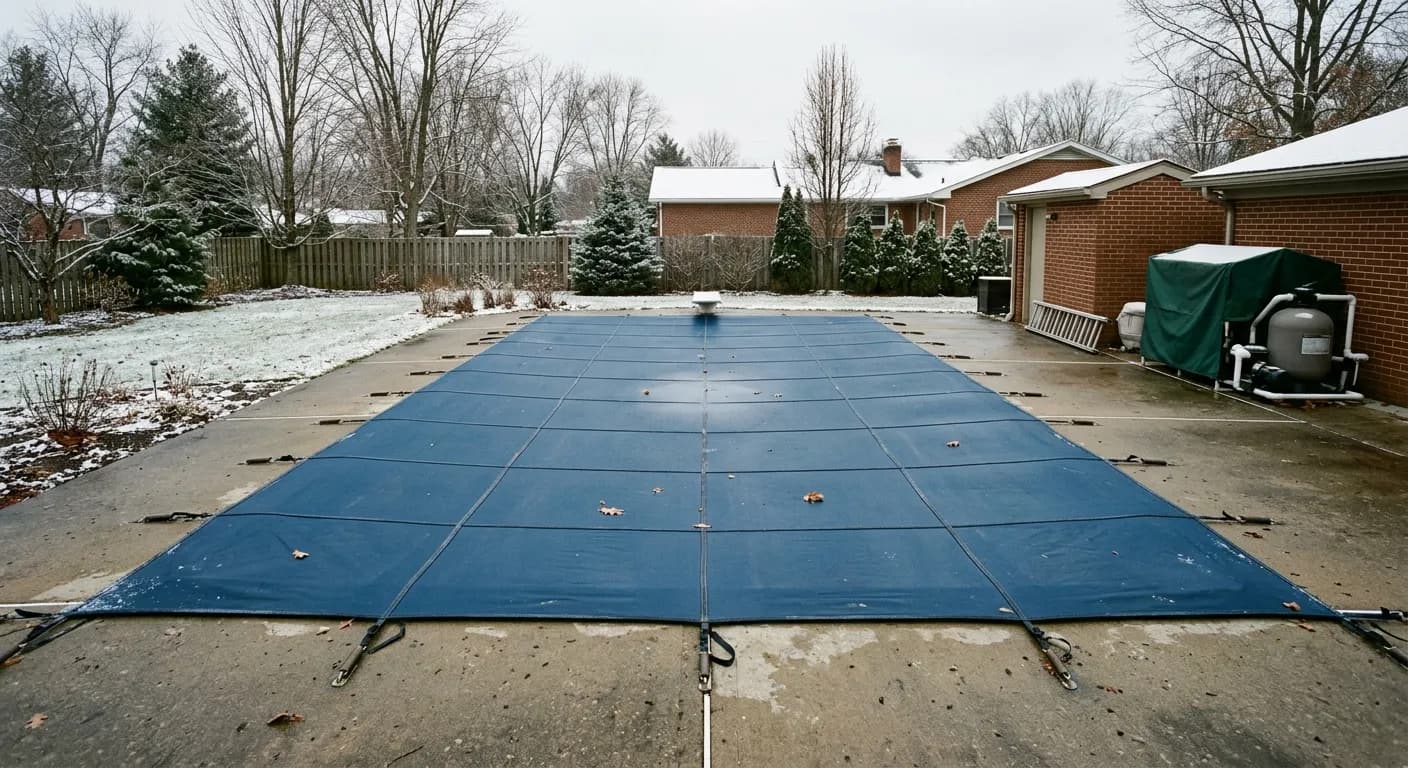
A safety cover is stretched tight across the pool and anchored into the deck, built to hold weight. Look for one that meets the ASTM F1346 standard for pool safety covers. They cost more, but they last for years, and the pool stays closed off all winter instead of only when the gate is locked.
From an insurance standpoint, a pool is one of the biggest liability exposures a homeowner has, and it doesn't take the winter off. Companies look at fences, locked gates, and covers when they decide whether to write a home with a pool, and an empty-looking backyard pool is exactly what draws neighborhood kids in. I wrote more about that in our summer post on pools and backyard liability.
While You're At It
- Make sure the fence and gate latch still work. Winter is when they get ignored.
- If you added a pool, a heater, or a new deck this year, tell your insurance company. It may change your other-structures limit or your liability needs.
- If you have a pool, an umbrella policy is worth pricing. It's usually less than people think.
Have a pool? contact us or call the Point Pleasant office at 304-675-4132 for a free look at your coverage, client or not. Pools are one of the biggest liability risks a homeowner has, and a lot of policies aren't set up for one.
This is general information, not specific advice for your situation. Every policy is different.